
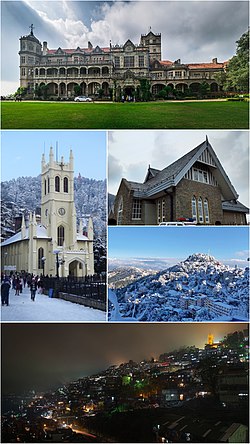
Shimla is popularly known as the queen of hills situated in the northwest Himalayas. Sitting majestically above the searing plains, the British designated the town as the summer capital of India. The higher levels of the town reflect this British connection, comprising mostly buildings in the Victorian style, while the lower slopes are occupied with Indian bazaars and restaurants. Traffic is banned from the historic central area, (known as the Mall) which means that the atmosphere is calm and the air pristine.
In 1864 Shimla was declared as the summer capital of India. After Independence, Shimla became the capital of Punjab and was later named the capital of Himachal Pradesh. In 1903 a rail line was constructed between Kalka and Shimla.
Located at the altitude of 7,460 feet above sea level, Shimla is rightly called the Queen of the hills – as it’s surrounded by seven hills. All seven hills are an essential part of this hill town. British rulers conquered Shimla after defeating Gurkhas in a battle and created the beautiful hill town of Shimla. Even today, these seven hills restore the glory and charm of Shimla.
There are many stories/ versions mentioned in the History for the derivation of the name “Shimla”. However, the ones which I could relate to are, one version being that Shimla took its name from ‘Shamla’ meaning a blue female another name for Goddess Kali. The place was on the Jakhu Hillside, there was a temple of Goddess Kali and another version being the name Shimla was derived from ‘Shyamalaya’ meaning blue house said to be the name of house built of blue slate by a faqir on Jakhu. According to Vishwa Hindu Parishad, the popular holiday retreat was originally called Shyamala but as the Britishers found it tough to pronounce, they renamed it Simla which later became Shimla.
Shimla is a very popular holiday-retreat and is well-known for its Victorian architecture, which is reflected in certain areas of the mall and the Ridge. Cart Road also known as Circular Road runs south of the Mall and is connected to it via the lifts. The Ridge, north of the Mall, is a good place to view the seven majestic hills of Shimla. Further along the same road is Lakkar Bazaar, which is a good place to buy some handicrafts and other souvenirs.
Places to visit while in Shimla
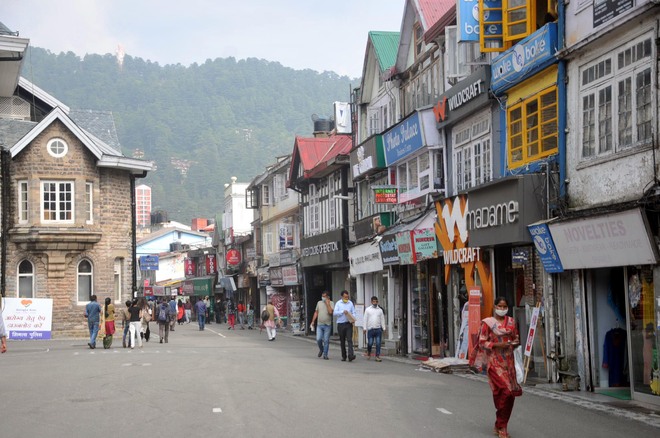
The Mall: The Mall is the main shopping centre/ street of Shimla. This shopping centre/ street has a good number of banks, restaurants, post offices, clubs, bars and tourists offices. There is a famous theatre of Shimla called Gaiety Theatre. The Mall is also the main meeting place for the people of Shimla.
The Ridge, (North of The Mall): Built at the top of the town at 2230m, The Ridge is the center of Shimla’s cultural and social life – an excellent place to view the surrounding mountains.
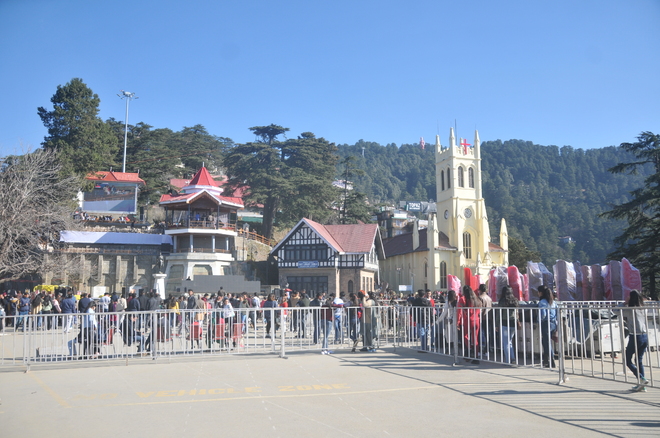
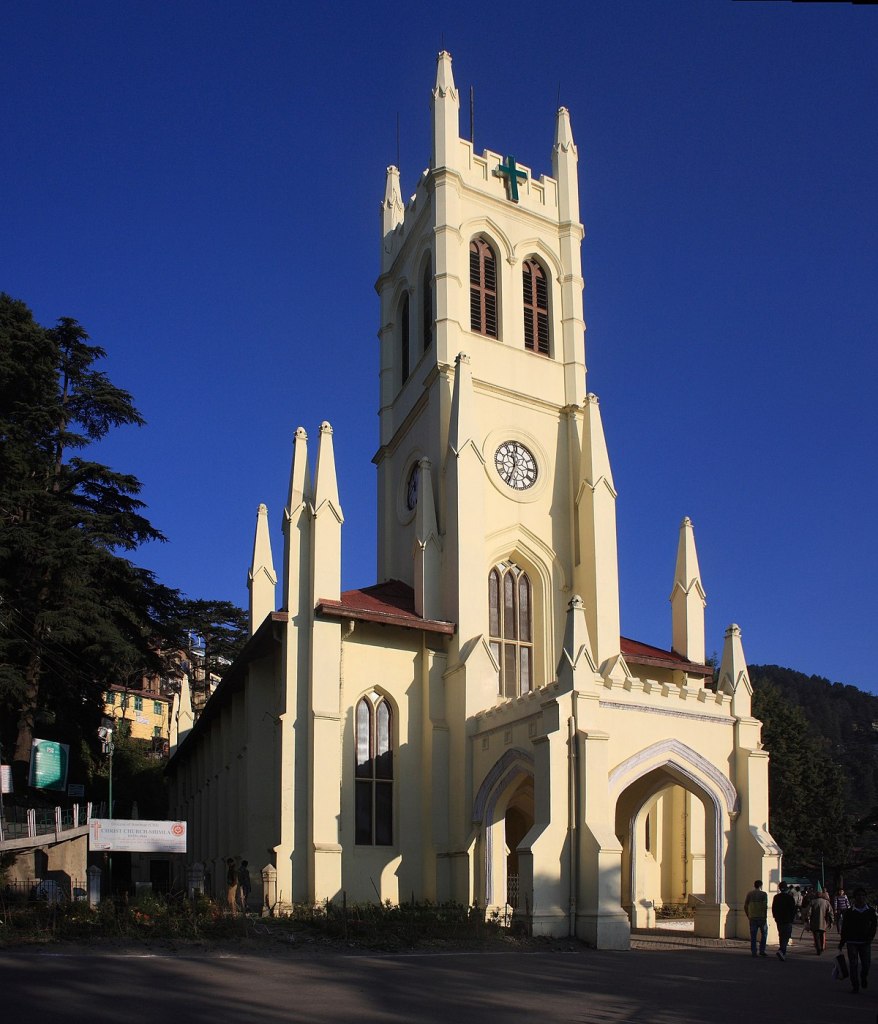
Christ Church, The Ridge (Near Municipal Library): Constructed in 1846, this is the second oldest church of the North India. The stain-glass windows, representing charity, faith, patience, hope, fortitude and humility, and 19th century organ are particularly impressive. The fresco that surrounds the chapel window was designed by Lockwood Kipling, Rudyard Kipling’s father.
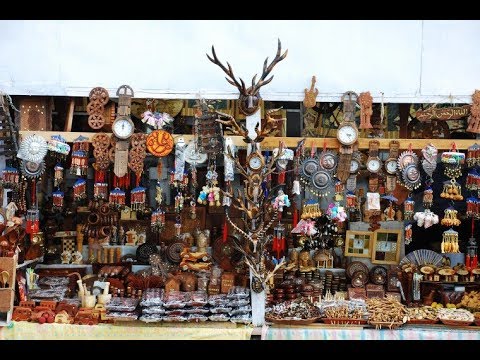
Lakkar Bazaar, next to Ridge: Shop until you drop when you are at Lakkar Bazar! Situated next to the Ridge, Lakkar Bazar offers a delightful experience to all those who are interested in buying wooden decorative items on their Shimla tour. It is a common spot for locals to spend some leisure evenings and has become a go-to place for shopaholics.
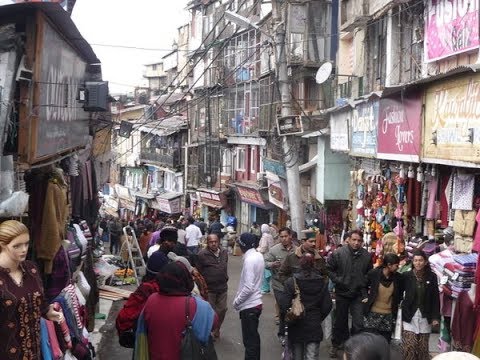
Lower Bazaar, The Mall (Below Central Section). The Lower Bazaar is home to the city’s less expensive hotels, cheaper restaurants and stores, and a congested wholesale vegetable market. Although less opulent than its upper neighbour, the Lower Bazaar retains an old worldly charm and is an excellent place to try some Shimla specialty dishes, like Urad Dal with rice or Shepard’s Pie. It also sells clothes and household items.
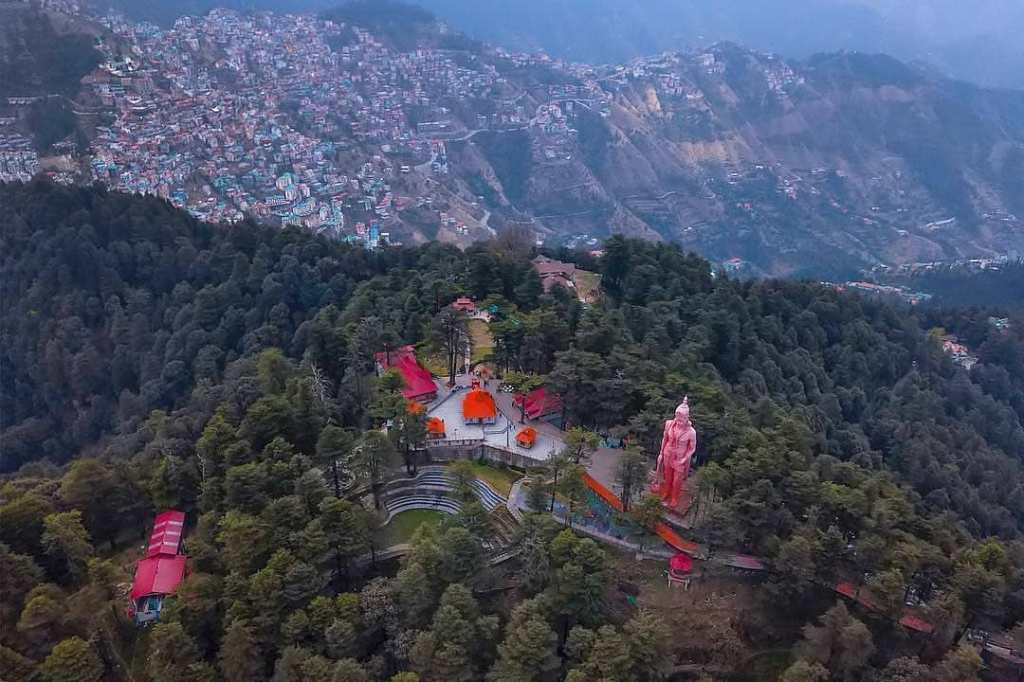
Jaakhu Temple, Jakhu Hill. Offers spectacular views of the mountains from its location above the town. According to the epic Ramayana, the monkey god Hanuman rested here during his journey to the Himalayan mountains. The climb up is a physically demanding one-hour walk. However, you can drive up the hill. The temple and hill side is populated with monkeys.
Annadale, is a suburb with beautiful bottom valley includes a ground which has a helipad and a single golf course in the city. One of the few in India an “Army Heritage Museum” is also situated here. The ground has the lush green environment, with gorgeous views of the nature.
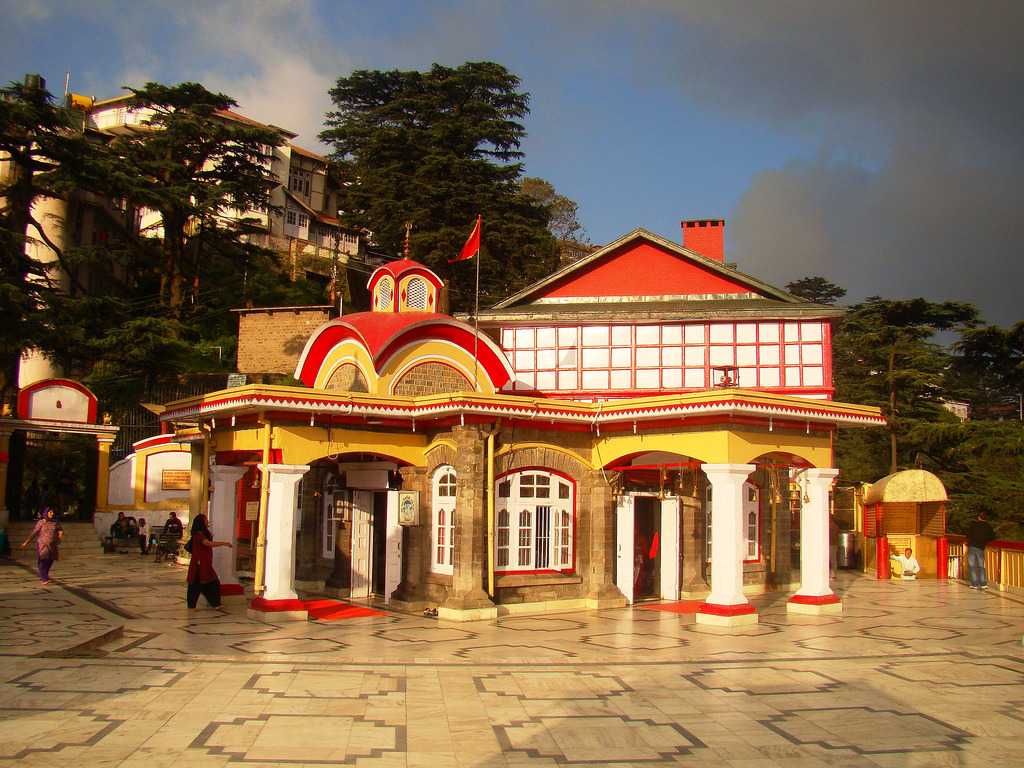
Kali Bari, is a temple situated in the city centre. The temple is dedicated to Goddess Shyamala Devi, after whom the name of the Shimla is kept. It is a beautiful temple, with majestic views of the city.
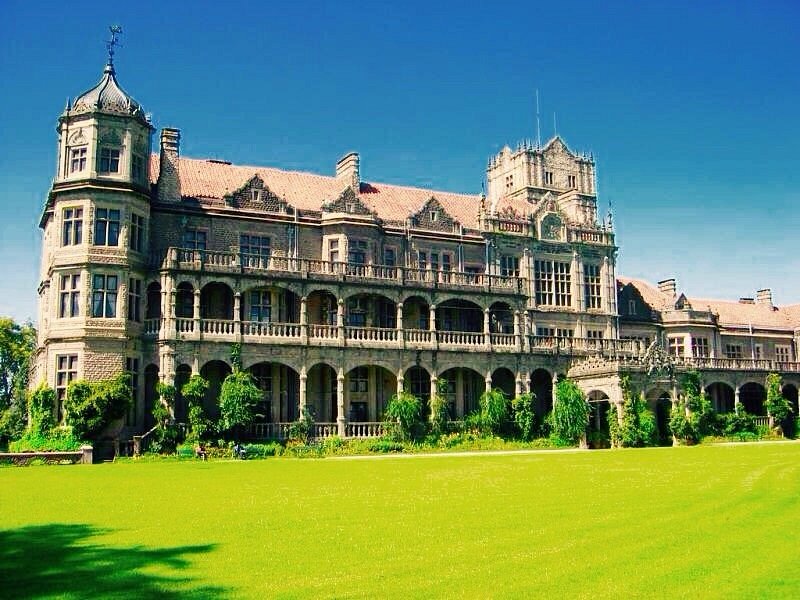
Viceregal Lodge, The Mall (Atop Observatory Hill), (Only the entrance hall and gardens are open to the public). This lodge is now part of the Institute of Advanced Studies. An imposing British-raj mansion built under the guidance of Lord Dufferin in 1888. Manicured British style gardens surround the mansion on three sides, while the fourth side is a place to relax and watch the sun dip below the Himalayan foothills. The teak-paneled interior is impressive, and well worth a viewing.
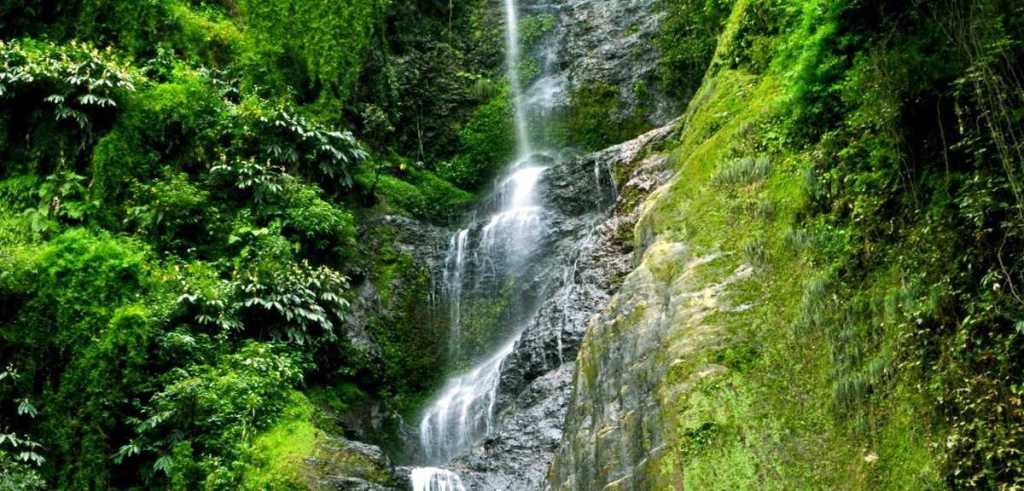
Chadwick Falls, 7 km away from Shimla, the inviting spot of Chadwick Falls is a premier travel destination. A trip to the Chadwick Falls during the monsoons will be an unforgettable experience. Located in an incredible landscape, the place is home to some old shrines that are sites of immense significance for pilgrims.
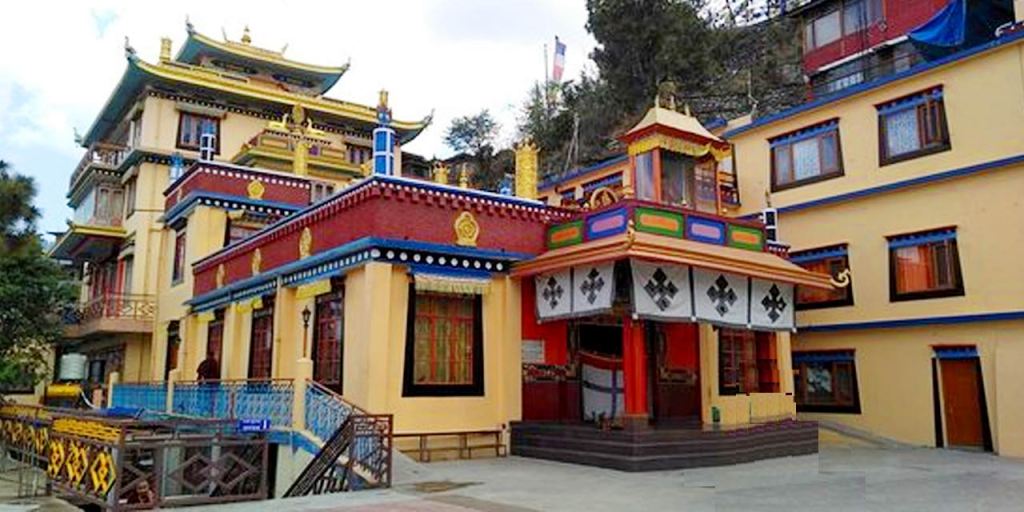
Dorje Drag Monastery, Sarasvati Garden Estate, Kusmuti. It is a beautiful Buddhist monastery that displays the prevalence of Tibetan culture in the state. A monastery in the Nyingma tradition of Tibetan Buddhism, also known as Thubten Evam Dorje Drag.
Shimla Water Catchment Sanctuary, A unique, well preserved mixed Himalayan Forest with predominantly Himalayan Cedar trees. The forest is home to the barking deer, goral, flying squirrel, pine marten, porcupine and leopard. There are also a great number of birds; in fact, there is the highest density of Koklass pheasant in this forest. There is a man-made reservoir in the center of the forest that provides drinking water to Shimla town. The reservoir was completed in 1901 and to the water supply scheme from the sanctuary is Shimla’s only gravity feed water supply scheme. The sanctuary is under the charge of the Forest Department (Wildlife).
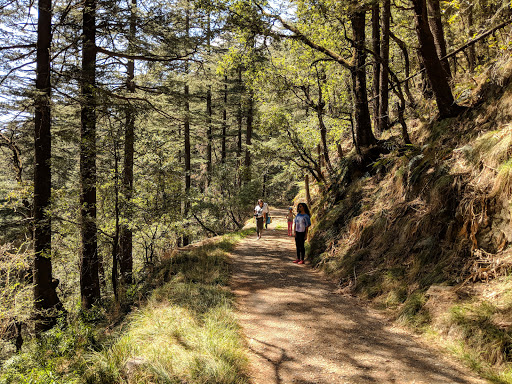
Shimla is heaven on Earth…. It is rightly described as the Queen of hills….
 FREE REIN