
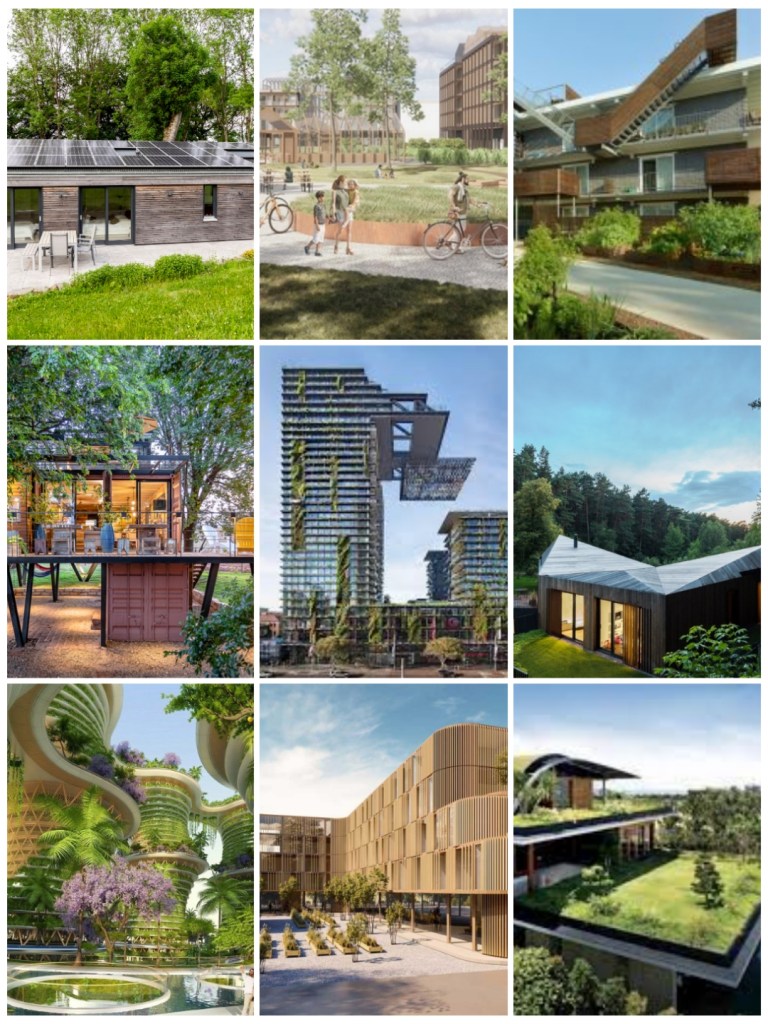
Sustainable architecture is a general term that refers to buildings designed to limit humanity’s impact on the environment. Sustainable architecture may be defined as the architecture that seeks to minimize the negative environmental impact of buildings by efficiency and moderation in the use of materials, energy, development space and the ecosystem at large. In recent years, sustainability concept has become the common interest of numerous disciplines. The reason for this popularity is to perform the sustainable development.
To understand the concept of sustainable architecture, let us first read through its history.
“History is not everything, but it is a starting point. History is a clock that people use to tell their political and cultural time of day. It is a compass they use to find themselves on the map of human geography. It tells them where they are but, more importantly, what they must be.” John Henrik Clarke
Many of the practices and principles used in sustainable architecture are rooted in ancient building techniques that were transformed with the rise of modern materials and mass production in the industrial age. In India, we have been using the concept of vernacular architecture from ages which is no different from the word sustainable architecture which is used in the recent times. The modern consciousness about the need for sustainable architecture can be traced back over 50 years to the anniversary of the first Earth Day, the international environmental movement, and the ensuing legislation that it sparked across the globe.
In the last hundred years, architecture was influenced by the sustainability discourse and many architectural and building innovations were tied to progress of ideas of sustainability. The influence of phases was profound on architectural practice, driven by new construction technologies such as insulation materials, renewable systems and efficient heating and cooling technologies. Sustainability represented a vision for new practice and performance driven architecture and resulted in new production and performance calculation indices and methods. Several paradigms dominated the architectural and building practice. The most recent two are: ultra-efficiency and effectiveness.
Green building (sustainable) is defined by the Office of the Federal Environmental Executive as “the practice of: 1) increasing the efficiency with which buildings and their sites use energy, water, and materials, and 2) reducing building impacts of human health and the environment, through better siting, design, construction, operation, maintenance, and removal throughout the complete life cycle.”
Characteristics of Sustainable Architecture
- Overall focus on reducing human impact on the environment
- Minimal wasteful, harmful energy consumption thanks to the use of renewable energy sources, such as solar panels and natural heating, cooling, and ventilation systems
- Buildings that produce at least as much energy as they consume for a net zero effect
- Water conservation systems, such as rainwater collection and recycling gray water
- Integration into the surrounding landscape
- Use of renewable materials, such as bamboo, hemp, cork, flax, and soy
- Replacement of conventional materials like concrete with sustainable alternatives, such as hempcrete (made from hemp, lime, and water) or conventional plastics with innovative bioplastics made from algae
- Use of recycled and upcycled materials
- Adaptable, modular spaces made from natural materials that can be easily broken down and repurposed or recycled
- Tiny houses, micro apartments, and other small structures that help address the appetite for more sustainable housing and use less land mass and energy
- Alternative housing solutions, such as homes and apartment buildings constructed from recycled shipping containers as well as floating architecture on waterways around the world that address housing shortages in dense coastal areas
- Incorporation of plants and nature via living walls, tree-covered residential towers, and green roofs to help cool existing buildings and create healthy biophilic environments for humans
The aim of sustainable architecture involves neutralizing the harmful effects of the sector that threaten the planet’s environmental stability and the quality of life of those living in the buildings.
 FREE REIN